
Blackberry Removal
Why Does Blackberry Keep Growing Back After You Cut It?
Blackberry keeps coming back because cutting the canes leaves the root crown intact, and the crown is where the plant stores its energy. Across the Willamette Valley, Himalayan blackberry regrows season after season from that underground reserve, which is why cut-and-walk-away never works. Understanding the plant's biology shows why permanent removal has to reach the crown.
Cutting the canes doesn’t touch the part that matters
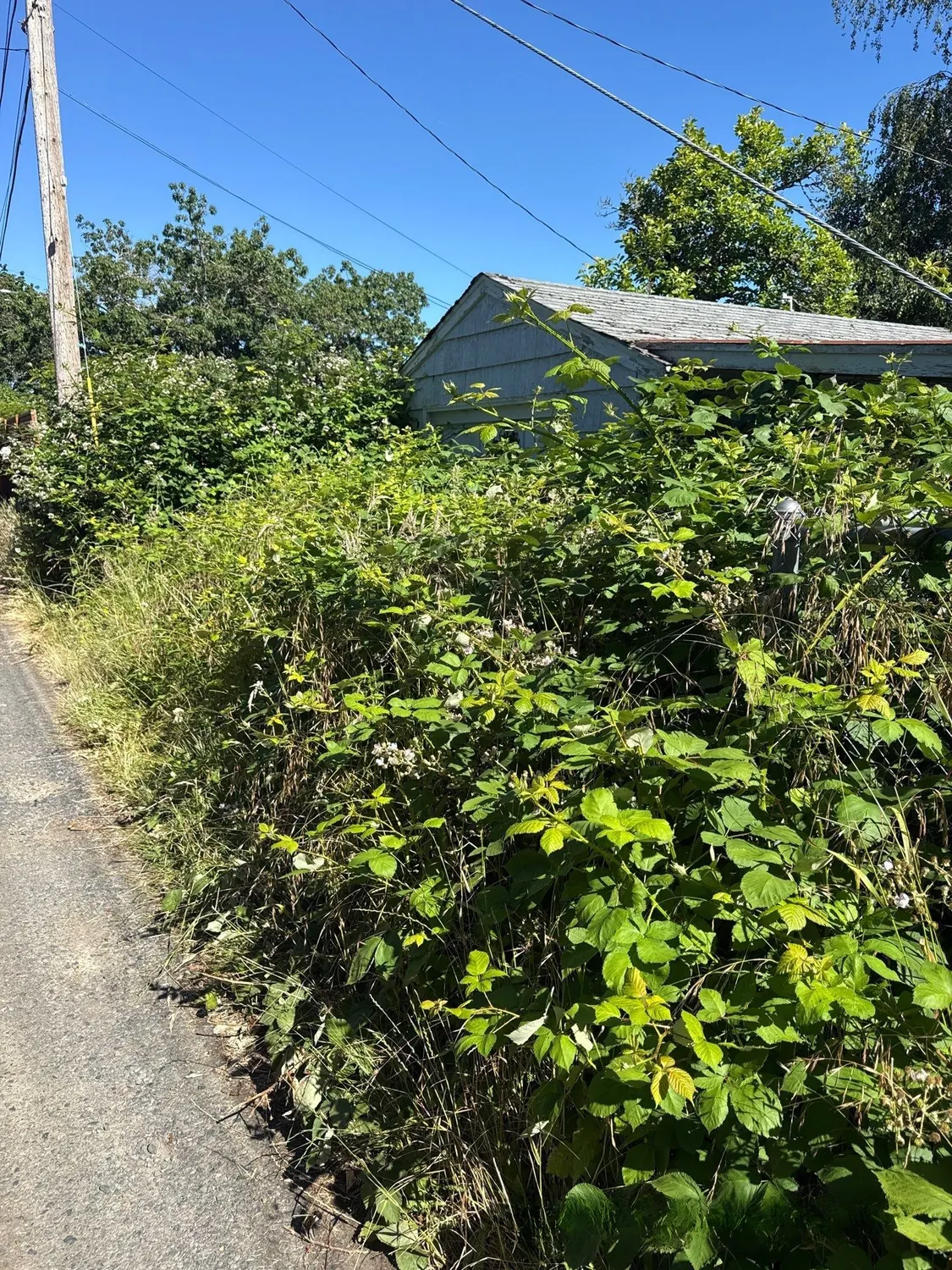
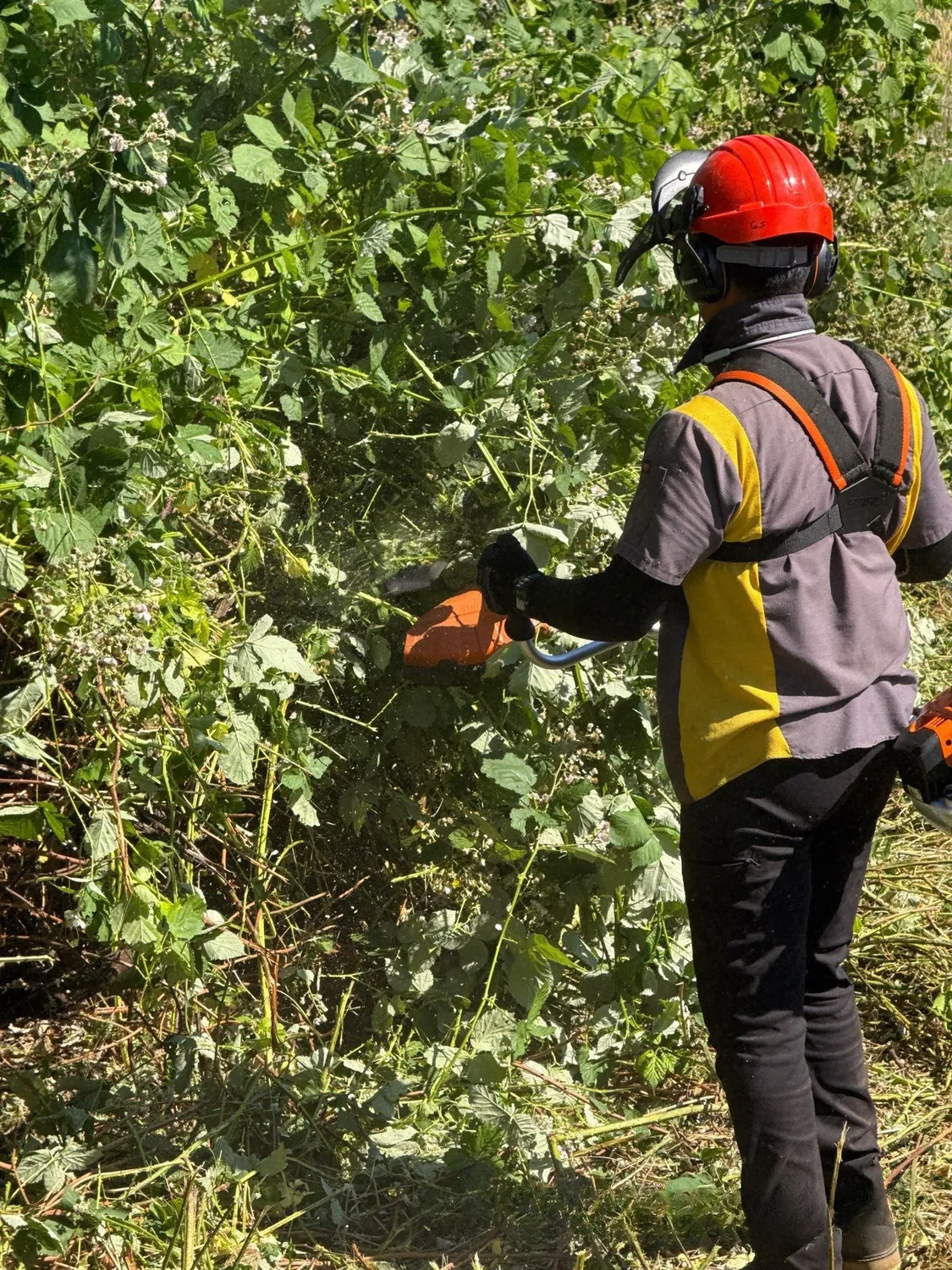
The root crown, a woody energy reserve at or just below the soil surface, survives cutting and pushes up fresh canes. When you cut blackberry to the ground, you remove only the current season’s visible growth. The crown remains untouched, full of stored energy, and it responds by sending up new canes within weeks. Cutting sets the plant back briefly; it does not kill it.
How Himalayan blackberry spreads and rebuilds
Himalayan blackberry rebuilds through three separate mechanisms, which is what makes it so persistent. It regrows from the root crown and underground rhizomes. Its cane tips root wherever they touch soil, starting new plants along the edges. And birds and mammals spread its seeds widely, so new seedlings appear even in treated areas. According to Oregon State University Extension, a single plant can grow into a six-square-yard thicket in under two years. Removing the visible canes addresses none of these underground and seed-based sources.
Will blackberry grow back after herbicide?
Blackberry often regrows after a single herbicide treatment if the crown is not killed. Herbicide works best as a follow-up to mechanical removal rather than as a one-time fix, and timing matters. Applied at the wrong point in the season, it suppresses top growth without reaching the crown. Even correctly applied, most patches need repeat treatment across multiple seasons. Herbicide alone rarely eradicates an established thicket.
Why permanent removal means removing the root crown
Lasting removal comes from taking out the root crowns, since that is where the plant’s regrowth energy lives. Mechanical extraction, digging or pulling the crowns and as much root as possible, addresses the source directly rather than the symptom. On large or established patches, machine extraction is far more effective than repeated surface cutting, and it leaves open ground instead of a temporarily setback thicket. Professional blackberry removal targets the crowns so the patch does not simply return.
The part everyone skips: follow-up
Even thorough crown removal needs follow-up, because seeds in the soil and stray root fragments can restart the patch. Eradicating a large infestation often takes several years of checking the area and pulling new seedlings before they establish. Oregon State University Extension stresses that consistent attention is the deciding factor. Replanting the treated ground with vigorous, competitive plants helps shade out and crowd new blackberry growth.
The mistakes that let blackberry win
Four recurring mistakes keep a blackberry patch alive despite repeated effort. Cutting canes without removing the crown leaves the energy reserve intact. Composting cut canes on site lets cane tips and root fragments re-root. Skipping the follow-up season allows seedlings and missed crowns to rebuild the thicket. And leaving the ground bare after removal invites fresh seedlings into open, sunny soil. Each mistake feeds the plant’s natural persistence.
Disposal deserves particular care. Cut canes left in a pile can root where they touch soil, and blackberry seeds survive ordinary composting. Shredding or hauling the material prevents it from restarting the infestation. Pairing crown removal with proper disposal and a replanting plan is what turns a temporary cut into lasting removal.
Stop fighting the same thicket every year
Noosh removes Himalayan blackberry at the root crown on properties across Salem, Keizer, and the Marion and Polk county areas, so it does not simply grow back. Our crews extract the crowns and reclaim the ground. Request a blackberry removal assessment today.
Frequently Asked Questions
Can I kill blackberry by just mowing it?
Only with repeated mowing over multiple years. A single mowing removes canes but leaves the crown, which resprouts. Mowing every few weeks through the growing season for several years can eventually exhaust a stand, but it demands sustained effort most properties cannot maintain.
Do goats permanently get rid of blackberry?
No. Goats readily eat blackberry canes and strip a thicket’s canopy quickly, but they do not remove the root crowns. Grazing reduces top growth so crowns can be located and dug out or treated, making it a first step rather than a permanent solution.
How long does it take to fully eradicate a blackberry patch?
Eradicating an established patch commonly takes several years. Crown removal handles the existing plants, but seeds in the soil and stray root fragments keep producing new growth. Yearly follow-up and replanting with competitive vegetation are what finish the job.
Is Himalayan blackberry a fire hazard?
Yes. Dead canes inside a blackberry thicket dry into a dense mass of fine fuel that ignites easily and burns hot. When the thicket grows under trees, it also acts as a ladder fuel, carrying fire from the ground into the canopy.
Need help with blackberry removal?
Noosh Stump Removal handles blackberry removal across Salem and the Mid-Willamette Valley. See our blackberry removal service or get an estimate for your property.