
Wildfire Mitigation · Sublimity, OR
Wildfire Mitigation in Sublimity, OR for Defensible Space
Sublimity sits where open farmland begins shifting toward the foothills of the Oregon Cascades. Wildfire mitigation in Sublimity, OR, can address brush, low limbs, dead vegetation, and other fuels across this changing landscape.


Get an Estimate
Tell us about your property. We actually call you back.
Noosh Stump Removal provides wildfire mitigation services for homes, acreage, and managed properties in Sublimity. We look at how vegetation connects across your property and where those connections bring fuel closer to structures.
Sublimity Sits Between Farmland and the Foothills
Wildfire conditions around Sublimity can change as you travel northeast from town. Agricultural land surrounds much of the community, while rural properties extend toward Drift Creek and the foothills.
The Sublimity Fire District describes the area as part of the foothills of the Oregon Cascades. Its second station sits northeast of the city in the Drift Creek area. The Marion County Community Wildfire Protection Plan also lists Sublimity among the county’s cities at risk from wildfire.
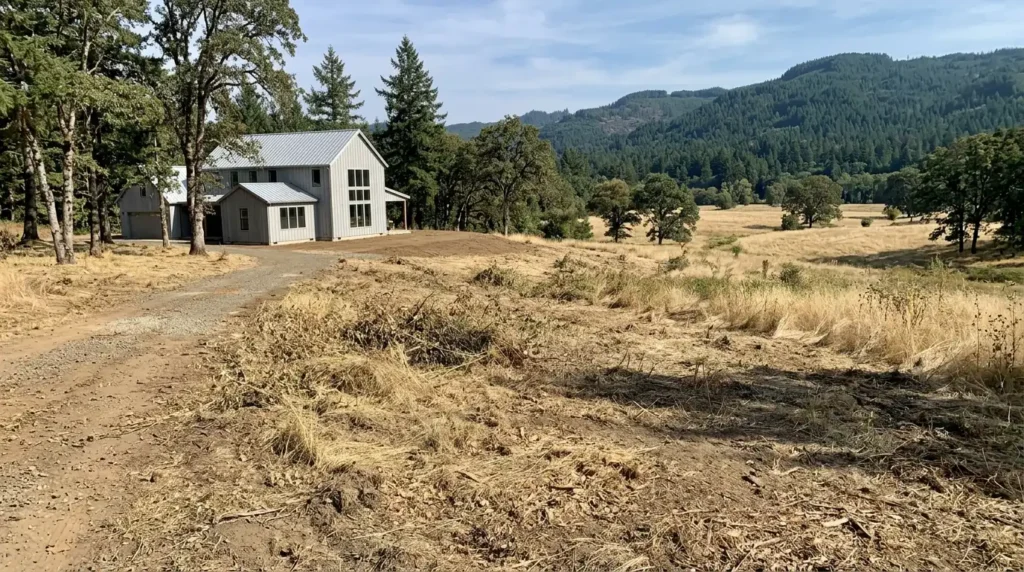
Those local conditions affect what we assess. An open property beside farmland can have dry grass and unmanaged edges. A foothill property may also have brush beneath trees, low limbs, and denser vegetation.
Where Can Fuel Build Up on Your Property?
Wildfire fuel can develop wherever vegetation creates a continuous route toward a structure. Some fuel is easy to spot, while other problems form beneath trees or along property edges.
We may address areas such as:
- Field edges: Seasonal grass and unmanaged vegetation can build up where residential land meets agricultural acreage.
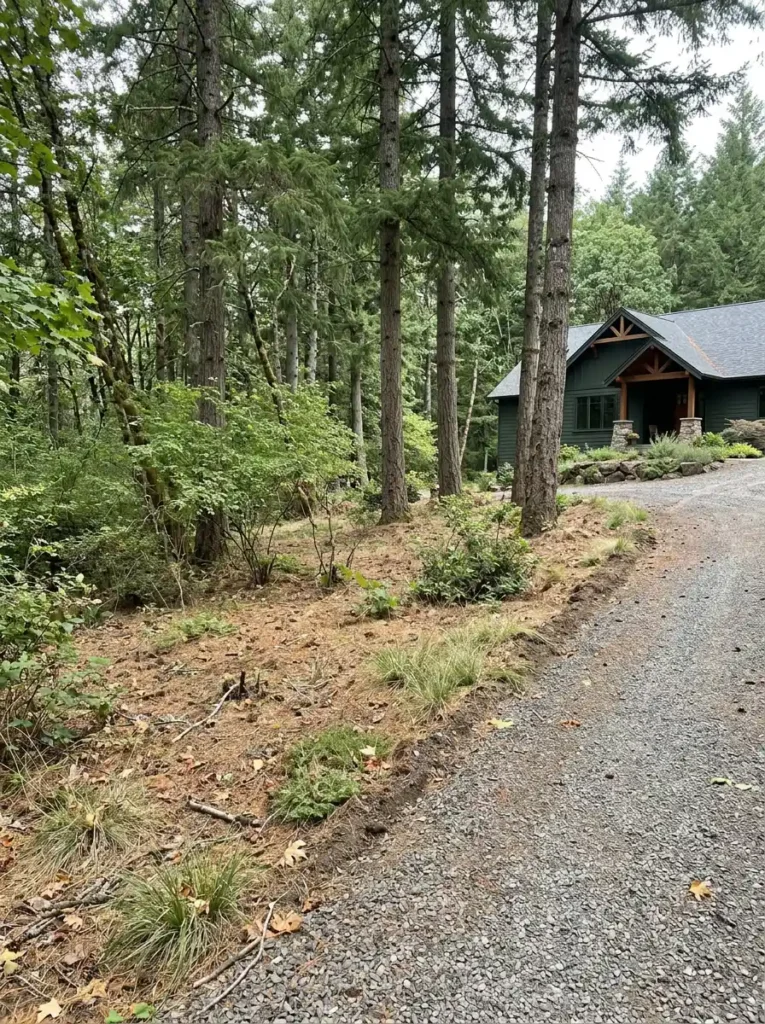
- Wooded sections: Brush and low branches beneath trees can form ladder fuels that allow flames to move upward.
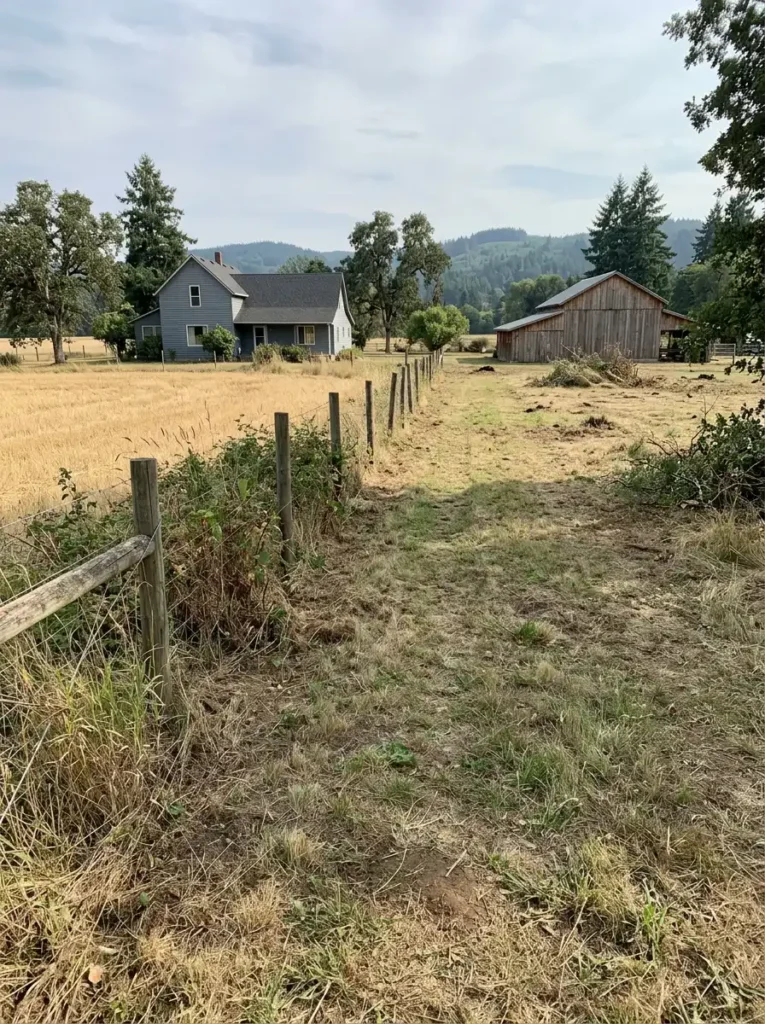
- Fence lines: Grass, invasive plants, and dead material can collect along boundaries that receive less regular maintenance.
- Outbuildings: Vegetation around barns, sheds, and other structures can create another route for fire across rural land.
- Access routes: Overgrown vegetation along driveways and property entrances can add fuel in areas used to reach your home.
Dense areas may require land clearing and brush removal. Other properties need selective pruning, thinning, or removal of accumulated vegetation instead of broad clearing.
Start With the Parts of Your Property That Need Attention First
A large rural property can have several fuel concerns at once. Treating every area as equally urgent can make it harder to decide where to begin.
Our Wildfire Readiness Audit starts with an in-person property walk-through. A certified mitigation specialist and former wildland firefighter evaluates the vegetation, structures, and fuel paths present on your land.
The audit produces a written report that ranks the areas that need attention. That gives you a practical order for future fuel reduction rather than relying on a generic property checklist.
Fuel Reduction Can Look Different Across Sublimity
Properties around Sublimity range from residential lots to rural acreage near agricultural and foothill land. We adjust the physical vegetation work to what is actually growing around your structures.
Around in-town and residential properties, that may involve removing accumulated plant material or reducing vegetation close to structures. Along farmland edges, attention may shift toward dry grass, brush, and less-managed boundaries.
Farther northeast toward Drift Creek, wooded sections can add another layer. Low branches, understory growth, and dead material can connect ground-level vegetation with larger trees.
Keep Regrowth From Rebuilding the Same Fuel Paths
Initial clearing can reduce existing fuel, but plants continue growing after the first visit. Grass returns, brush expands, branches grow lower, and dead plant material accumulates again.
Ongoing vegetation management helps keep previously treated areas from becoming overgrown. Maintenance can focus on seasonal brush, ladder fuels, dead material, and the defensible-space areas around structures.
Your property may need different attention from year to year. Growth rate, vegetation type, and the amount of managed land around your home can all affect what needs to be cut back.
Why Choose Noosh
Firefighter-Led Assessment
A certified mitigation specialist and former wildland firefighter evaluates the property in person, reading how fire actually moves through the specific vegetation on site. The plan targets real ignition points based on that assessment.
Twenty Years in the Mid-Valley
Two decades of work across Marion and Polk counties built familiarity with the vegetation, seasonal fire behavior, and terrain specific to this region. Every recommendation on the report reflects that regional experience.
Full Service From Audit to Cleanup
One team handles the Wildfire Readiness Audit, the clearing, the brush removal, and the follow-up maintenance. A property owner works with a single point of contact from start to finish.
Our Work
Recent wildfire mitigation work around Sublimity and the Mid-Valley.
Our Clients Rate Us a Perfect 5 Stars


Wildfire Mitigation Near Sublimity, OR
FAQs About Wildfire Mitigation in Sublimity
Wildfire preparation can involve several parts of your property. These answers cover common questions about vegetation, defensible space, and rural fuel reduction.
What is defensible space around a Sublimity home?
Defensible space is the area around your home where vegetation and combustible material are managed to reduce potential fuel. The amount and type of work depend on what surrounds your structure.
What are ladder fuels?
Ladder fuels are low vegetation that can help fire move from the ground into taller shrubs or tree canopies. Brush and low tree limbs are common examples.
Do rural properties need the same fuel reduction as in-town homes?
The work can differ because rural properties may contain larger grass areas, wooded sections, fence lines, outbuildings, and longer access routes. We assess those features as part of the property rather than applying one layout everywhere.
Can you identify wildfire risks related to the house itself?
Yes. Our home hardening recommendations identify structural priorities during the Wildfire Readiness Audit. Our field services focus on the vegetation and landscape work, while structural changes require the appropriate contractor.
Related Services
Wildfire Readiness Audit
Noosh's Wildfire Readiness Audit gives Salem, OR homeowners a prioritized, written wildfire risk report from a certified specialist and former wildland firefighter.Learn More Wildfire Readiness AuditDefensible Space
Noosh builds and maintains wildfire defensible space zones for Salem, OR homes across the Mid-Willamette Valley and WUI, guided by a former wildland firefighter.Learn More Defensible SpaceHome Hardening
Noosh identifies wildfire home hardening priorities for Salem, OR properties across the Mid-Willamette Valley and WUI as part of a Wildfire Readiness Audit.Learn More Home HardeningVegetation Management
Noosh provides ongoing wildfire vegetation management for Salem, OR properties across the Mid-Willamette Valley and WUI, scheduled by a former wildland firefighter.Learn More Vegetation ManagementBuild a Practical Wildfire Plan for Your Sublimity Property
Your wildfire preparation should reflect the land around your home, from open agricultural edges to wooded foothill acreage. Addressing connected vegetation can reduce fuel near structures and give you a defined plan for future maintenance.
Noosh Stump Removal provides wildfire mitigation in Sublimity, OR, based on the conditions found on your property. Call or text (503) 836-8815 to arrange a property visit and request an estimate.